
When Fernando Mendoza led Indiana University to their first-ever national championship in college football, fans and analysts alike dissected every aspect of his game. His arm strength. His decision-making under pressure. His leadership. But one detail that flew under the radar for most casual observers was sitting right there in plain sight on the sidelines: liquid chalk.
Mendoza didn't just use liquid chalk for the championship game. He's been using it during practices and games throughout the season, treating it as an essential part of his preparation. Some say it’s his Secret weapon.
For a quarterback, grip is everything. It's the difference between a laser-accurate pass and a wobbly duck that gets picked off. In high-stakes moments when your hands are sweating and the pressure is mounting, having absolute confidence in your grip can be the edge that separates champions from everyone else.
That's where liquid chalk comes in.
What is Liquid Chalk?
Liquid chalk is exactly what it sounds like: chalk in liquid form. It's made from magnesium carbonate (the same ingredient in traditional block or loose chalk) suspended in alcohol. When you apply it to your hands, the alcohol evaporates in seconds, cleaning the skin of oils that can interfere with a good grip. What remains once the alcohol evaporates is a thin, even layer of pure chalk that bonds to your skin.
Unlike traditional chalk that can create clouds of dust and require constant reapplication, liquid chalk provides a longer-lasting, cleaner solution. You apply a small amount once, let it dry for a few seconds, and you're good to go for an extended period. If it’s a super sweaty day, you can reapply liquid chalk as often as needed to keep your hands chalky and dry.

Why Athletes Are Turning to Liquid Chalk
Athletes across virtually every sport have discovered what climbers have known for years: liquid chalk simply works better in many situations.
Longer-lasting grip. Because liquid chalk bonds to your skin rather than just sitting on the surface, it doesn't rub off as easily. For a quarterback like Mendoza, this means consistent grip from the first snap to the last, without constantly having to reapply between plays.
Cleaner application. There's no dust cloud when you use liquid chalk. This is huge for indoor facilities and game situations where traditional chalk can create a mess. It's also better for equipment – no chalk residue building up on balls, gloves, or uniforms.
Better in humid or wet conditions. When you're playing in rain, snow, or high humidity, traditional chalk can actually absorb moisture and make your grip worse. Liquid chalk creates a moisture barrier that maintains grip even when conditions are far from ideal.
Precision control. You can apply liquid chalk exactly where you need it. Want more on your fingertips and less on your palm? Easy. Need to target specific areas for maximum grip? Done. This level of control is impossible with traditional chalk.
For football players specifically, liquid chalk has become a game-changer. Quarterbacks need perfect grip on the ball without any residue transfer that could affect receivers. Linemen need grip that lasts through dozens of plays without reapplication. Running backs need confident ball security in traffic. Liquid chalk delivers on all counts.
The Problem with Inferior Liquid Chalk
Here's where things get tricky: not all liquid chalk is created equal.
Many companies cut corners by adding rosin to their liquid chalk formulations. Rosin is a sticky substance derived from pine trees, and while it does create grip, it comes with some serious downsides. In many sports, rosin may be considered a banned substance even though liquid chalk is not. Always look for rosin-free liquid chalk.
Rosin leaves residue. It transfers to everything you touch – the football, your uniform, other players' equipment. This buildup can actually make grip worse over time and creates a mess that traditional chalk never would.
Rosin attracts dirt and debris. Because it's sticky, rosin acts like a magnet for dust, dirt, and anything else in the environment. What starts as enhanced grip quickly becomes a grimy coating that compromises performance.
Rosin can irritate skin. For athletes who use liquid chalk regularly, rosin-based formulas can cause skin irritation, dryness, and even allergic reactions in some cases.
Some companies also add fillers to extend their product or reduce costs. These fillers dilute the effectiveness of the chalk and can leave a weird film on your hands that feels nothing like pure chalk should.
At Friction Labs, we take a different approach: no rosin, no fillers, ever. You get the grip you need without any of the downsides that come with inferior products.
Friction Labs Liquid Chalk: Three Options for Every Athlete
We make three different liquid chalk formulations, each designed for specific needs and preferences:
Secret Stuff Liquid Chalk Our most popular liquid chalk, Secret Stuff delivers premium grip with a super-fine texture that feels incredibly smooth on your hands. It's perfect for athletes who want maximum grip without any gritty feeling. The formula bonds quickly to your skin and provides hours of consistent performance. This is the go-to choice for athletes who demand the best and won't compromise on quality.
Secret Stuff 80% Our newest formula and revered by the best climbers in the world.. It goes on silky smooth and creates an almost invisible layer of grip. We added a food grade starch which interacts with the magnesium carbonate to form a significant bond to the skin. Chalk stays on your hand longer so you don’t need to reapply as often.
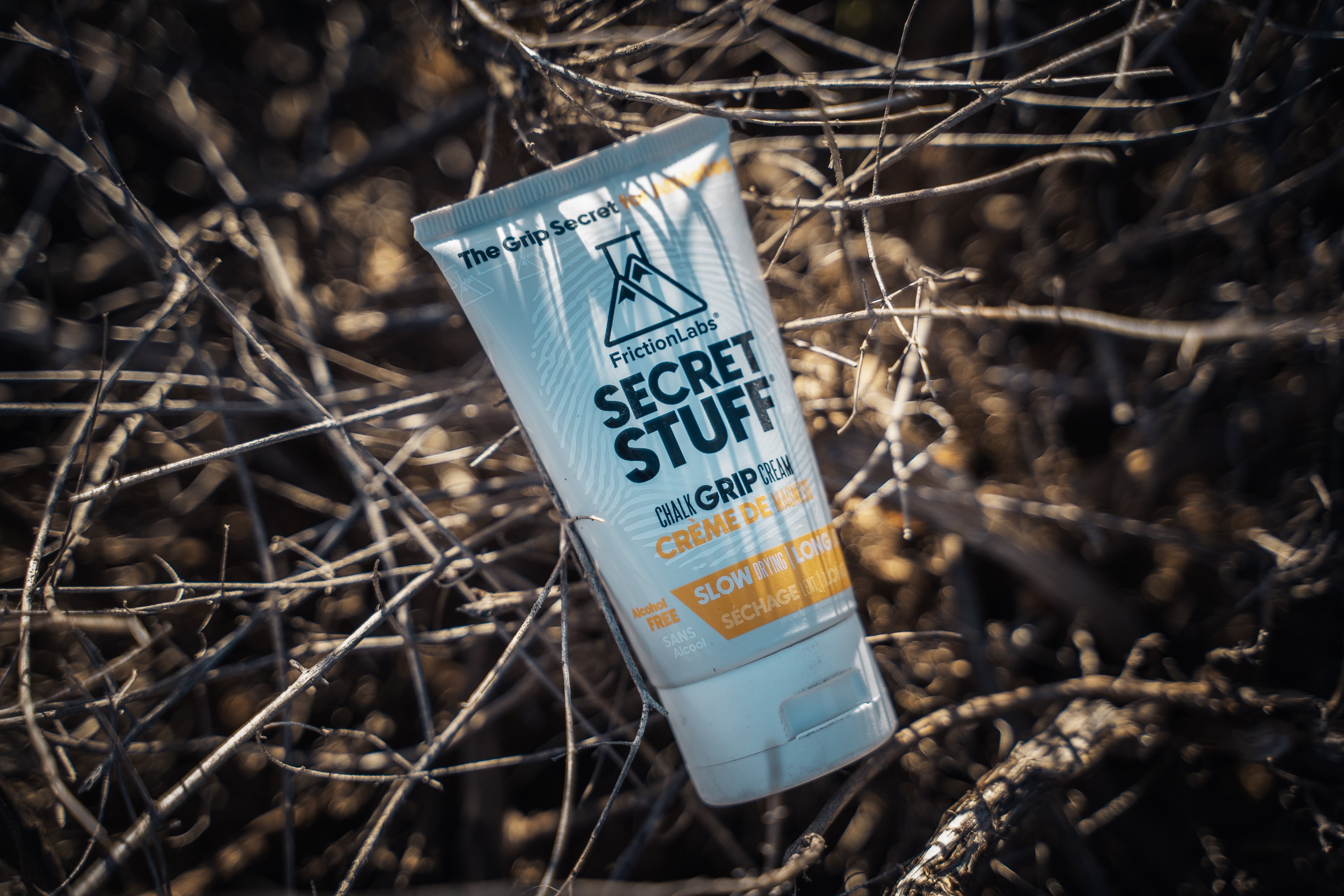
Secret Stuff Alcohol Free For athletes who want maximum friction and don’t want to dry your skin out with alcohol. This formula takes about 30 seconds to dry. Once dry this chalk stays on your hand the longest. Great for sensitive skin or cold conditions.
All three formulas share the same core principles: no rosin, no fillers, just pure performance. The choice comes down to personal preference and the specific demands of your sport.

Gloves and Liquid Chalk
Many athletes turn to gloves to help their grip when conditions are tough, though gloves are only appropriate for certain sports. In sports where gloves are not an option, or when an athlete prefers a more direct connection, liquid chalk is an excellent alternative. Liquid chalk will dry the moisture from your hands while still allowing the texture of your skin to feel the object. This connection is critical for control and applying the right amount of pressure for a great grip.
In sports where gloves are essential, such as baseball or football, liquid chalk can still be very helpful. Applying liquid chalk to your hands before putting on gloves can help keep the inside of the glove drier for longer, improving comfort and maintaining a more secure grip within the glove.
The Bottom Line
Fernando Mendoza's national championship run wasn't won by liquid chalk alone – his talent, preparation, and mental toughness deserve the credit. But the fact that a championship-caliber quarterback trusts liquid chalk as part of his game-day preparation speaks volumes about where sports performance is headed.
Grip matters. Consistency matters. And when you're competing at the highest level, even the smallest edge can make the difference between good and great.
Your hands deserve better. Your performance demands it.
